Subscribe
Share
Share
Embed
Ducks Unlimited Podcast is a constant discussion of all things waterfowl; from in-depth hunting tips and tactics, to waterfowl biology, research, science, and habitat updates. The DU Podcast is the go-to resource for waterfowl hunters and conservationists. Ducks Unlimited is the world's leader in wetlands conservation.
On this episode of the Ducks Unlimited Podcast, we have special guest, Bethany Bethard, to explain an article that she wrote for MeatEater regarding the four flyaways. Stay tuned to learn more.
VO:Can we do a mic check, please? Everybody, welcome back to the Ducks Unlimited podcast. I'm your host, doctor Mike Brasher.
VO:I'm your host, Katie Burke.
VO:I'm your host, doctor Jared Henson. And I'm your host, Matt Harrison. Welcome
VO:to the Ducks Unlimited podcast, the only podcast about all things waterfowl. From hunting insights to science based discussions about ducks, geese, and issues affecting waterfowl and wetlands conservation in North America. The DU podcast, sponsored by Purina Pro Plan, the official performance dog food of Ducks Unlimited. Purina Pro Plan, always advancing. Also proudly sponsored by Bird Dog Whiskey and Cocktails.
VO:Whether you're winding down with your best friend or celebrating with your favorite crew, Bird Dog brings award winning flavor to every moment. Enjoy responsibly.
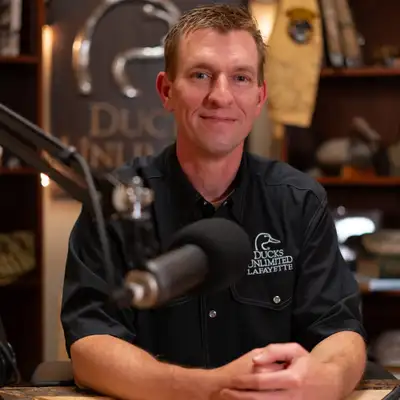
Matt Harrison:Hey, everyone. Welcome back to the Ducks Unlimited podcast. I'm your cohost, Matt Harrison. Also joining with us is cohost, doctor Mike Brazier, and we have with us today very special guest, Bethany Bethard. How are you doing today, Bethany?
Bethany Beathard:I'm doing pretty good.
Matt Harrison:Wonderful. It is such an honor to have you on. And Doctor Mike, you doing okay on this fine December 22 morning?
Mike Brasher:Is it the twenty second? It is. Yeah.
Matt Harrison:We're a few days from Christmas.
Mike Brasher:Yeah. I'm I'm doing great, Matt.
Matt Harrison:It's good
Mike Brasher:to be with you. Bethany, it's great to be with you. It's great to meet you, and I'm excited about, the topic that we're gonna cover here.
Bethany Beathard:Yeah. Me too. Thanks guys for having me, and I'm looking forward to diving into this conversation. I'll probably learn some more from you.
Matt Harrison:Well, we are super excited about this podcast that we're hosting today with Bethany. We're gonna talk a little bit about the flyaways. But before we do all that, Bethany, we would love just to kinda have you tell our listeners a little bit about your history and also how you kinda ended up in the role that you are today.
Bethany Beathard:Yeah. So I'm one of the cohost on the Do You Ascend podcast where we share stories from women all over The United States and different journeys into the outdoors, and it's really a great community. So if you're listening and you have a wife or a daughter or a lady in your life that you wanna share that with, do that. But I kinda landed in this space of just a country girl growing up, and I just started sharing my life online. And that evolved into me writing some articles, and now I write for a lot of the major outdoor publications and as well as create content as a content creator.
Bethany Beathard:And, yeah, I just wanted to show the authentic side of women in the outdoors, being a mom, you know, going out and hunting and learning new skills and becoming more self sufficient. So, it really just sprang from my background as being a kid running through the Oklahoma prairie lands and, you know, just rural upbringing to now as a mom sharing that with my kids.
Mike Brasher:Bethany, I got a question here for you. So you you do some writing now. Obviously, that's one of the things that we're gonna talk about is an article that you wrote on this subject of flyaways. Did you growing up, like, did you enjoy writing? How did you I always kind of wonder about that, outdoor writers or any kind of journalist.
Mike Brasher:At what point do you know or realize that that's something you want to pursue? When did you know you were good at it? How does all that play out?
Bethany Beathard:Yeah. I was really a reader as a kid, and I'll I think that just translates to writing. I never thought of it as being something that I would do. I actually have a degree in science, and so kinesiology, totally separate than what I do now. But I really enjoyed sharing my life, and it just just a series of events of social media is crazy how this works, but I had been asked to write a little blog post on this small website that was for women in the outdoors, and the lady that just happened to be, like, volunteering used to be an editor and was like, wait.
Bethany Beathard:This cannot go on this. Like, you need to meet somebody else. And it was just like a snowball effect. And from there, I got into a writer's association, and it really developed this gift that I didn't know that, you know, I had, I guess, and just really sharing. When you're passionate about something, I think that translates.
Bethany Beathard:So I never thought I would be a writer nor even envision what social media looked like as a kid, I guess, you know, because I was pre social media kid. But, yeah, it just I it kinda just fell into my lap, and I'm just here for the ride.
Matt Harrison:That's such a cool story. And now you talked about growing up in the outdoors. Did you have somebody that kinda introduced that to you, or did you just have a really big interest in an early age of getting outdoors? How did that come about as far as your love and passion for being in the outdoors?
Bethany Beathard:Yeah. Hunting heritage is probably one of my number one topics that I write about. I have pictures of my great, great grandpa who actually was a trapper on the Southern Arizona border and trapped the jaguars. Like, I have pictures of them, like, black and white photos of these. You know?
Bethany Beathard:So that's really cool now that we see the conservation of them coming back. Yeah. So my family has just generationally always been outdoorsmen. And then my grandpa had three daughters and was just kinda like, I don't want this to die with me, and my daughter's gonna learn these skills. My mom was one of those then.
Bethany Beathard:So, yeah, my grandpa, every time he came out, he would take his rabbit hunting or whatever. He had some boon and crockets. He has some Arizona big game records. He was a muzzleloader hunter. And so this was really more about this is what our family does, and I want you to learn this skill.
Bethany Beathard:And so growing up, you know, I didn't really get taken to deer camp. I grew up on 55 acres, so predator control was a big thing. But whenever I became an adult, I really say I grew up a marksman because we could you know, twenty twos, pop piano on a fence post, that was, like, a normal thing. You know? We had a a manual skeet shooter.
Bethany Beathard:But whenever I became an adult, was like, I really wanna, you know, harvest my own food. I wanna do this. And now, I mean, I get to do it for fun and a living kinda, and, yeah, it's amazing.
Matt Harrison:That is very, very cool story. The whole point of this podcast is we're gonna discuss about an article that you wrote for MeatEater, and it's titled Understanding North America's Waterfowl Flyaways. And I love to chase waterfowl, as well as Doctor. Mike does, and it is so cool to see the article that you wrote, and I was reading it, and it's just, there's a lot of things that people don't quite understand about it, and there's a lot that people don't know when you discuss, you know, flyaways in general. And we haven't done a whole lot as far as the podcast goes for Ducks Unlimited, many things own the flyaways itself, so I'm super excited about.
Matt Harrison:I know Doctor. Mike is also excited about this opportunity to talk about this. So can you tell us a little bit about how this came about, how you landed this piece, and then also just kinda the progression that it has made to the point today?
Bethany Beathard:Yeah. So as a freelance writer, a lot of your, you know, job is trying to pitch ideas to different editors. And I got connected with the mediator editor, and, you know, I reached out to him, and he was like, yeah. We have some waterfowl pieces coming up. And at the time, I was really doing a lot of waterfowl hunting in Oklahoma, and so it just, like, really fit the piece.
Bethany Beathard:And so I ended up getting two articles out of that that pitch, both on waterfowl, was really great and awesome. And, yeah, I was able to interview some people and really dive deep into something that like you said, like, you know, I hadn't been exposed to it, but I really didn't know the science behind all of it. So it was really a great research for me Mhmm. And learning that. And so, yeah, that's kinda how it came to be, and it was a great experience.
Mike Brasher:Bethany, I thought you did a great job with the article, and it I I I live in sort of the scientific technical world all the time, and I think about flyaways. I I guess I don't know. In in a lot of different ways, but your article captured other elements of their importance that I don't always think about. What I found particularly interesting and and insightful and and useful is is how you broke down different hunting strategies by flyway which intersect with the dominant types of of of habitat types dominant habitats that occur across those flyaways. So we can talk about how they differ from one flyaway to the next, but but there's a lot of truth in that, and you did a nice job pulling that out.
Mike Brasher:And I know you interviewed some some guides and outfitters and other hunters that for for though that part of the article, but it was as I thought as I was reading it, I was thinking about, yeah. I mean, that's a pretty cool intersection between the birds and the landscape and the style of hunting that occurs. Did you set out for that to be something that you wanted to talk about, the differences in hunting style and how it corresponds to the different habitats and different groups of birds that happen to associate sort of differently across these, quote, flyways? Yeah. So when we were talking about the pit, when I
Bethany Beathard:got the assignment, you know, they had kinda gave some things they wanted to go into it, but it really developed more, I think, with that personal touch of you, actually talking about something that, you know, hunts that specific flyaway, you know, has experience with that. You know, I felt really limited because I'd only really been in Oklahoma for the majority of me hunting waterfowl. You know? So I really wanted someone who was going to read that, and this is really a beginner focused I feel like someone that's really not really you know, has been introduced to the flyaways or understanding it, be able to take that information and apply it. And so I really wanted to break them down and then be able to learn the specific techniques, I guess, for that flyaway and apply it for where they were at.
Bethany Beathard:And, yeah, I think it turned out really well-being able to get those quotes from those people.
Matt Harrison:One thing that's really neat too, you know, is, like Doctor. Mike said, kind of the heritage of how people hunt these different flyaways. And what is so crazy to me, it's it's funny that we're talking about this, this past year, we got to go to Oklahoma, duck hunting, and me and my brother on our way home, we were actually discussing is what is so crazy to us when you truly just think about it, is you can drive seven or eight hours in the opposite direction of which you're hunting, and the landscape, the way people hunt, how they the gear they use, the decoy setups, it's just drastically different. And you're like, man, I can get in a vehicle and drive on one or two tanks of gas and be in a completely different landscape and be around people that hunt in a totally different way. I mean, you know, you go to Oklahoma and you may be hunting a little bitty small cow pine, or you may be hunting a dry field, or you may be hunting some sheet water in a wheat field, whatever it might be, and then you go just a couple hours, you know, over to Arkansas, and you're in flooded timber, or you're in a rice field.
Matt Harrison:It's just really neat to think about it, you know. And then when you look at even further over, when you get on the Atlantic Flyway and such and seeing how people hunt in all these different ways, your article, like Doctor. Mike says, does a great job of really just explaining the heritage and also how people go about hunting. So that was one of the things that also popped out to me, Doctor. Mike, is really just, Bethany, you did a phenomenal job of explaining those different styles of hunting.
Mike Brasher:Yeah. I I agree, Matt. And the other one that I thought you were gonna throw in there it's funny whenever you started telling the the story that you were going to there, I I was pretty sure I was gonna guess what you were gonna talk about, and you exactly did. The one that you left out was the Great Salt Lake, and you know, you because think about the you and I you and I both hunted there together, and and that Intermountain West, that arid region, semi arid region, yet it's incredibly important for for ducks and geese, and there's certain species that have a stronger affinity for that. The style of hunting is different.
Mike Brasher:And then of course, as you mentioned, the Atlantic Coast or the Pacific Coast or the Gulf Coast, when you get into those tidal systems, the style of hunting can be different altogether. So it is really cool, and and that's largely an artifact of these birds being such you know, being very mobile, obviously migratory. There are somewhere in the neighborhood of 43 different species of waterfowl in North America. They differ in their preferred habitat types, and a lot of that is driven by what they eat, their preferred diet items, food. And and so that sort of also has an effect on where they go and how you hunt them and how they're susceptible.
Mike Brasher:And it it's it's a neat way of thinking about it.
Matt Harrison:No doubt. And what, Doctor. Mike I gotta share this story with you, Bethany, what Doctor. Mike was referring to, we got to go was that last year, Doctor. Mike, I believe, or even?
Mike Brasher:It was,
Matt Harrison:yeah. Last year, we got to go
Matt Harrison:out to the Great Salt Lake, and, you know, you go out on airboats, and you travel miles and miles, and then they they go out, they find a spot kinda on a shoreline, then they get these little bitty coffin blinds, it's almost pretty much like a little sled if you really think about it, and then they get these little cutout, just solid black cutout that's cut out like a duck, and they stick them all around the coffins, and they just line them up, and I remember thinking, what in the world are we doing? I'm like, there's no way that this is gonna work. There's no way that ducks are gonna see these and be, you know, drawn to them. But anyway, they started explaining. Was like, you know, a lot of these ducks, there's not trees around, there's not anything that's hindering their flight, so they're real low to the ground.
Matt Harrison:A lot of the birds of which we were chasing were teal, and so they they were a couple feet off the ground, you know, so they see these cutouts, and it resembles a duck. And I can remember some of the groups, I felt like they I could've just reached out and touched them, and it was so neat to see they hunted there and how the flyaway was just so much different as far as how they went about approaching their hunt and everything. It's just so, so neat. And like I said, I think that you did a great job in describing those flyaways and also the hunting tactical side of it.
Bethany Beathard:Yeah. And I think that just goes to those firsthand experiences. You know, we can have the science behind it. Well, whenever you're the actual boots on the ground, you're the one that's, you know, learning through trial and a lot of error probably, you know, really seeing how these ducks respond to everything. And, you know, I felt you know, I had friends from all over, so I was like, let me reach out to some of these people, you know, some of these guides that I know, and give them to give some, you know, techniques and accounts.
Bethany Beathard:And, yeah, I really feel like that that was a really good cap to the article as far as resonating, you know, with people because that's that's what really we're we're wanting to know. You know? How do we do it in our flyaway?
Mike Brasher:Matt, we probably need to talk a little now about, like, what the flyaways are, the different the the different way those terms can be used. And so we got a couple of different ways we can do this. Bethany, do you wanna take a take a shot at that? And, I mean, I'm I'm happy to to contribute to that, but also kinda your perspective, what you learned and what maybe what you already knew, the new things that you learned, the questions that you may have come out of of it with. I mean, I'd kinda like to hear you give the introduction of flyaways, what they are, and and and we'll go from there.
Bethany Beathard:Yeah. So I really my family was not never a big waterfowl hunting family, so I didn't really have a, you know, big grasp on what the flyaways were. But I had mentioned earlier, you know, my family being from Arizona, so a lot of big game hunting. And when we moved, I was little, to Oklahoma, my mom we lived in, you know, pre social media, so we're driving into town. Yeah.
Bethany Beathard:And, you know, she's like, spot to see what who how many animals you guys can spot or whatever. And it was always a big deal where she's like, oh my gosh. Look at all those Canadian geese. Not that Canadian geese aren't in that flyaway, but you just don't see them like you see in Oklahoma fields. You know?
Bethany Beathard:And so I just remember just seeing, like, fields when I was a kid, like, this certain time of the year. So it was kind of my first exposure is, like, these fields full of geese on the way into town. But, yeah, we have four flyaways in North America. And right now, I'm actually living in the Atlantic Flyway, and I've moved since to Georgia. That stretches from Canada all the way down to the Caribbean Coast.
Bethany Beathard:And I'm not as verses the the waterfowl that is in this because I haven't been here. So you might be able to say what species are in here. You know? And some of them are you know, there's species that, I guess, are in all of them. You know, you might still see see them.
Bethany Beathard:We also have the Mississippi flyaway, and I guess that's kind of a a famous one because that's what you're seeing in, like, Arkansas, Louisiana. It's kinda still grabbing those in there. And I'm most familiar with the Central Flyaway because I've hunted in Oklahoma. And, well, I've hunted a little bit in Arkansas too, but, and then we have the Pacific Flyway that runs from Alaska all the way down into the Mexican.
Mike Brasher:You know? Have you have you lived anywhere in the Mississippi Flyway? Because you've lived in the Atlantic Flyway now. You've lived in the Central Flyway. You've lived in the Pacific Flyway if you're in Arizona.
Bethany Beathard:Right? And I live in California too. Yeah. Okay. For yeah.
Bethany Beathard:So my husband's in military. I guess I should have probably let people know that. Okay. So I lived a little bit everywhere. From Oklahoma, mostly raised.
Bethany Beathard:But, yeah, I have not lived in the Mississippi Byway yet. Uh-huh. And just visited. Okay.
Mike Brasher:Well, that's good. Yeah. So, yeah, so the obviously, as you said, those four flyaways, the the one thing that, you know, that a lot of people think is that the these flyaways define exactly where the birds go, that if you're if a bird is in the Atlantic Flyaway, it's always gonna stay in the Atlantic Flyaway, and that's obviously not true. They're, As you point out in article, that flyaway concept was created, at least the way we understand it here in North America, those four flyaways, by Frederick Lincoln, a famous ornithologist back in the day. And there's a long story of how banding data in the early twentieth century helped define these major migratory pathways across North America, those which we refer to as as the flyaways.
Mike Brasher:And they basically, what they found or what Frederick Lincoln found is is, I think, Chris Nikolai, a good friend of mine, is the person that you interviewed in the in the article, and he was saying kind of the same thing is by by knowing where you band a bird and then where you recover a bird, you can begin to see what these tendencies for, sort of regional association are between breeding areas and wintering or migration areas. And so pretty soon they began to discover these broad patterns of geography of, you know, association. But birds do cross the flyways. We know that from a lot of other pieces of data. There's some other concepts that are down at the at a smaller level, like migration corridors, which are finer sort of delineation of major flight paths that are consistently followed by groups of waterfowl that Frank Belrose, another famous waterfowl ecologist, spent a lot of time, studying and defining in in some of his classic publications.
Mike Brasher:And so, how much of your conversation, Bethany, kind of revolved around around that and sort of how birds use the the the flyaways?
Bethany Beathard:Yeah. We act he was actually banding birds. It was in between stations whenever I interviewed him. So that was really cool. Yeah.
Bethany Beathard:We actually talked a lot about the banding process and the mapping. He really, you know, was able to give me a lot of insight to that and, you know, talk about how it's important that people do, you know, call those in and the harvest rate on the birds that are banded too. Like, how many people are harvesting in certain areas because we talked about the adaptive harvest management and, you know, that goes into the numbers and quotas. And he said it really helps because states, like, in quotes, need to have more control over their birds, you know, is what he was saying, you know, like, you know, the for their state. And that's why we see these varying numbers and quotas per state, but he said that banding process is really what lays the foundation for that.
Bethany Beathard:And it takes a while for, like, the data to actually go into, like, quota, you know, changing. But he really talked a lot about how that aids in, you know, conservation, and and it was really interesting because I had done another article or I've been doing some workup on another article that showed some pictures from, like, the early, you know, 1920, and you see, like, hundreds of birds. You know? Like, this is a harvest photo. You know?
Bethany Beathard:And so to see that to where we are now and how the banding process has really helped conserve the waterfowl from what they were harvesting then was really interesting, kinda crossing that over on some other research that I had been doing. But, yeah, Doctor. Nikola was very helpful and informative, and, you know, he was I mean, it was boosting the ground. He was really doing it. You know?
Bethany Beathard:And so it was really interesting to see him talk about that. Yeah. Chris is
Mike Brasher:a is a great friend, and it does not surprise me that whenever you caught up with him, he was out banding birds. He's he's probably banded more ducks than than 99% of living waterfowl biologists out there today. He is he's quite accomplished in in regard to that, and it was great that you were able to to connect with him. You know? And and whenever you talk about banding, the type of information we get from it, it sort of varies based on what species you're talking about.
Mike Brasher:A lot of cases there's some standard information that you get from it, you know, harvest rates, survival rates, and things of that nature. I would imagine some of what Chris was was thinking about and and he spent a lot of time doing is is, banding wood ducks. He's lived out in Nevada for a while, and they banded locally, local breeding wood ducks. And so those birds are are do kinda come back to the same site year after year, and they have stronger affinities for some of those locations. And so you see a
Bethany Beathard:lot of
Mike Brasher:states that are really ramping up their banding efforts for wood ducks because those are the birds that they're kinda taking care of. It may have been where some of those quotas that that Chris was talking about come from. How many wood ducks they need to ban? How many of these other birds they need to ban in order to ensure a reliable estimation of those survival rates for different subpopulations, whether it be within their state or or elsewhere? But then when you have a large enough sample of birds banded across all these different geographies, that that again, back in the back in the early days especially tells told us a lot about where the birds that they're raising and they're producing end up going, and so that really reinforces those interstate and international connections of these of these migratory birds.
Mike Brasher:Did you have any conversations with people that ask you if the if the, quote, flyaway was shifting? We hear that a lot.
Bethany Beathard:I didn't for this article, but I have But you've
Mike Brasher:heard that.
Bethany Beathard:Especially just living in Oklahoma, you hear that a lot. You know? Right. And I will say from experience, I have had better hunting in Oklahoma than I had from my experience in Arkansas at the time. But, yeah, I think a lot of people have said that.
Bethany Beathard:So it's funny that you mention it. You know, what do you what do you see with the data?
Mike Brasher:Yeah. Well so, again, I would start by I would start by saying, you know, it depends on what you mean by flyway. You know, the fly has the flyway shifted? No. Those flyways remain you know, the those those four flyways remain intact, and they still are the these large corridors within which certain populations of waterfowl have a tendency to migrate.
Mike Brasher:On the the question of whether the migration of birds has across this broader landscape has has shifted, I would probably preface that that my my answer part of my intro the introduction of my answer would be to say that these birds are migratory. They interact with a and always have interacted with a landscape that changes from year to year, and and it changes both within a year, and it changes across years. And the longer of a time frame you look at, the more change you observe. So if you're an animal that is interacting with a landscape that spans from Canada to Mexico, and if that landscape is changing, then it makes sense that some of your behaviors, some of where you end up, some of when you end up there is gonna change a little bit over time as well. And and that has happened to some extent for some species a little bit more than others.
Mike Brasher:We can look at Canada geese down on the Texas coast. We can look at snow geese, greater white front geese on the Texas and Louisiana coast, and some of their shifting distributions in response to changing landscape conditions and environmental conditions. There has not, however, been a wholesale shift of birds out of traditional wintering and migration sites. Have we seen some some shifts in in where the majority of those or when where some percentages of those are occurring or being encountered. Yeah.
Mike Brasher:But it depends on what species you're talking about. It depends on what population breeding population you're you're talking about. We did some work with doctor Lisa Webb at the University of Missouri and doctor Ram Verhajian, who works at universe works at I think he's with Minnesota DNR now, where we looked at band recovery data. Another great application of the data that you were talking about. We looked at sixty years of band recovery data for a number of different species and asked the question of, are they being harvested?
Mike Brasher:Is where they are being harvested now the same as where they were harvested in the nineteen sixties, in the nineteen seventies, eighties, nineties, etcetera? And as you would imagine, there have been some shifts. There is a general tendency for that harvest distribution to have shifted north a little bit. There's a lot of factors that contribute to that. But contrary to what a lot of people think, we did not see a tremendous shift westward into kinda to your point, Bethany, that you hear a lot of.
Mike Brasher:For some populations, there was a for some populations of of Mallards, there was a slight shift to the Northwest. And when I say out of the the the North to the Northwest, I'm I'm talking about harvest that occurs in December and January, which when you look at those recoveries, it's mostly in, in the Mississippi Alluvial Valley. So there's been a slight shift in the average recovery to the Northwest. But if you look at, at some of the other populations, the Great Lakes populations of mallards, in December and January, that average harvest distribution is is has kinda moved to the Northeast a little bit. And birds out of the Central Prairies, they're kind of if I remember this correctly, they've shifted very little at all.
Mike Brasher:So it really depends. It really depends on what birds you're talking about. It depends on what population of birds you're talking about, and it really depends on when you're at when you're wanting and when you're wanting to look at that question, like in terms of whether it be November, December, or January, the results are a little bit different. So it's a long wind it's a long winded answer, but the short version is migratory waterfowl and migratory birds are always changing because the landscape and the environment in which they live and interact is also changing. And some of that is our is attributable to what we do.
Mike Brasher:Some of it is just natural change, that occurs. So was that how was that for an answer?
Bethany Beathard:Yeah. That's great. I think so from the time that we're getting this data to the time that we're making the decision to change a quota because we're seeing these numbers, like, how long does that take?
Mike Brasher:Well, so I'll probably ask for clarification on on quota. Are we talking about a harvest regulation type of Yes. Okay. Alright. So we don't, with some exceptions, there may be some some some situations, I'm not sure if these are still in place where it's where there's a quota system.
Mike Brasher:I think back a number of decades, there might have been something of a quota system around some goose Canada goose populations in the in the Upper Midwest. I think those have largely been been done away with. So from a from a quota standpoint, the way we think about maybe some big game species or or things of that nature, there are very few instances of that being in place in waterfowl. There could be some with some swans, but but but in general, kinda if the if we're just talking about how quickly does information translate into a change in a regulation, well, I think I mean, the the Fish and Wildlife Service in The States go through here in the in The US go through that regulation setting process annually. That doesn't mean that data, at least from banding during any given year, is going to translate into a change during that year.
Mike Brasher:Typically, those regulations, if they change from one year to the next, are responding to is a is a short term or medium term change in habitat conditions on the breeding grounds and the population size breeding population size of ducks. And those things don't fluctuate dramatically from year to year, such that you're getting a a change in harvest regulation, every single year. I mean, you would know, and and, Matt, you would know also that for your entire, lifetimes, we've been in liberal seasons under adaptive harvest management. If you go back prior to adaptive harvest management, the changes occurred much more frequently, and it was, Bethany, kind of as what you were you were talking about there, where they would look at survival rates on an annual basis. They would look at habitat conditions on an annual basis, and we still look at all of that stuff, but there wasn't a formalized structure for processing that information and translating it into the optimal harvest strategy for a given year, and so they were just kind of having a lot of discussions, and this is what I think, and this is what this piece of information is telling us.
Mike Brasher:And there was a lot of arguing and discussion that would result in changes in regulations from one year to the next, and then back down the year after that, and then back up, and so it was a more knee jerk reaction reaction in in setting setting regulations, regulations, and and that that was was largely largely because because back back then they thought that harvest had a greater impact and had greater control over the annual ups and downs of population levels than what we actually now know they do. Harvest can harvest does matter, but the levels at which it occurs for the vast majority of waterfowl species in North America, that's not the driver of the annual changes in the population. So so although that information is super valuable for informing longer term understanding of how populations respond to changes in in habitat conditions, harvest regulations, We don't see banding data translate into immediate changes, you know, based on what you've done just the the past year. Does that make sense? I think I'm trying to I'm answering your question the way you asked it.
Matt Harrison:All this information is so fascinating and neat to really hear doctor Mike and also you, Bethany, break down and explain a little bit more in-depth. But let's take a podcast break real quick. We'll be right back to you in just a moment with some more information on all the flyways.
VO:Stay tuned to the Ducks Unlimited podcast, sponsored by Purina Pro Plan and Bird Dog Whiskey after these messages.
Matt Harrison:Alright. Welcome back from the break. Bethany, we've talked a little bit about the article in itself and some of the details of the article, but as a writer, I know that y'all face a lot of challenges when you write an article such as one talking about flyaways because it obtains so much information. And I know that this is information that you have to seek out and you have to ask, and it, most importantly, has to be correct. So what were some of the most challenging parts as a writer when you were writing this piece for MeatEater?
Bethany Beathard:Yeah. When you first put an article together, I feel like sometimes the article takes form in itself, And so as you start getting information, it develops a little bit more into what you initially thought. This was a very time consuming article just because you it is a lot of information, and you have a word count limit at the same time. Most of the time, there's a word count limit. So really trying to make sure that you pick the correct information that also gives enough, I guess, context to explain what you're trying to convey is a really it's a task in itself.
Bethany Beathard:This article, you know, obviously, interviewing Doctor. Nikolai was really interesting just for me, and it was a big part of this article to get all the history, a lot of the understanding, and then also kind of going to each flyaway and chasing down someone that had firsthand experience in that it could give me enough information to really explain to the reader because you never know who's gonna land on this article either. Is it gonna be the beginner? Is it gonna be somebody that kinda already knows or just, you know, trying to grow their knowledge a little bit? Or even a critic on the other side of it.
Bethany Beathard:You know? So you really wanna make sure that you get everything in there. And, obviously, MeatEater has a really great team that's gonna overlook it and get a final stamp. But, yeah, it was it was pretty time consuming. And, also, fly when you're doing the flyaways, they wanted a lot of, you know, backlinks and finding, like, the information where I could give first so people could go seek out more information.
Matt Harrison:For sure.
Mike Brasher:Yeah. I could imagine, I could imagine the the the difficulty of digging into this. And the other thing that I'll say, Bethany, you being a scientist, and and I do a little bit of writing for for our our magazine here, Scientists don't like word counts, dude. No. No.
Mike Brasher:It's like, just give we wanna tell you all the information that we think you need to know, and and then just that that needs to be it. Right?
Bethany Beathard:Yeah. Especially, like I mean, the human body is a lot. There's there you can't just word count, you know, whenever they're asking for that.
Matt Harrison:And especially when you're when you're talking about something such as the flyaways. When you think about it, these flyaways range all across The United States. So this isn't something that, is just extremely easy to convey as far as writing a piece about, you know, and I know I'm sure I'm not a writer, so I'm sure as a writer, you wanna get as much information as you can in there to make it most make most sense to those reading it and also give the best answer to those that are seeking answers for the flyaways. And when you're writing for somebody like MeatEater, I know that you wanna do it correct and do it to the best of your ability. But as we've said numerous times, you did a phenomenal job with this.
Matt Harrison:And one thing that did pop out to me with this article, and I I want Doctor. Mike, if you can, to take a minute and explain a little bit about this, because I was actually unaware of this before reading this article. But as I was reading it, it tells us in this article that each flyway has a council of state and federal biologists for the flyway, and I think that's really cool. So, Doctor. Mike, could you explain just a little bit about what that council might do and what they kinda achieve as a group?
Mike Brasher:Yeah. Absolutely. It's another one of the reasons why writing an article like this within a word count is is is a challenge because flyways, as we've we've already sort of talked about the the biological concept of a flyaway, which are these large, broadly defined pathways, you know, across which the bird through which the birds migrate. But there's also an administrative, sort of application of that of that word as it's come been as it's come to be known and and applied here in in North America. And it's it's further cool because those administrative flyways correspond to the to to essentially what was learned from the biological aspects of of a of a, quote, flyway.
Mike Brasher:The the just as we have four sort of biological flyaways in the ecological flyaways in the in in North America, Pacific, Central Mississippi, Atlantic, we have corresponding administrative flyaways, which are sort of they're they're geopolitical boundaries or or or associations that that correspond to those those same regions, and that made sense. They they came about in the late forties, so there's a lot to unpack here. Again, why such an article is is so challenging. Migratory waterfowl, migratory birds fall under federal jurisdiction just because the Migratory Bird Treaty Act, and and and and, Bethany, you you identified that in in the article. But the the the people hunt at a state level.
Mike Brasher:I mean, it's the individual states make up our country, and so the individual states are wanting to represent their constituents in what, to the federal government. If you look back to early twentieth century in the way this unfolded, individual states were petitioning the federal government to do certain things within within what the federal government was going to allow with regard to hunting regulations for migratory birds, migratory waterfowl in this case. And as you can imagine, that became very unwieldy and inefficient for the Fish and Wildlife Service to try to manage all of that, and the states were also suffering the consequences from that inefficiency because a lot of times their recommendations and what they would wanna see, in one state were were contradictory to what even their adjacent state would wanna be. And so if you're a federal agency trying to resolve all these differences among states and, sort of offer some give give some allowance to what they're wanting to say to wanting to see or asking you to do with regard to regulations. It was impossible.
Mike Brasher:So in the in the nineteen forties, the I forget the actual name. Maybe it was the International Association of Fish and Wildlife Commission at that time, put a proposal together to create these four flyways that would align, would be these geopolitical alignments that would, within which individual states could, could could come to a a forum and discuss issues relevant to them and and the management of migratory waterfowl within, within their collection of states. And that made sense, again, because waterfowl tended to broadly follow those those geopolitical, subdivisions. And so that that's how they came to be as these formal administrative units as they I think the Central Flyway was the first to really become associated or or whatever. Incorporated maybe.
Mike Brasher:That may be the way to say that. And and then the others followed suit. So you have a Pacific Flyway Council, Central Flyway Council, etcetera. That council is made up of the the sort of leadership a representative from the leadership leadership level of the state game agencies of each of the states in that flyway. Each of those flyway councils has a technical committee that works with them doing a lot of the heavy lifting on harvest regulations and looking at the data and doing some of the analyses and using the banding data, etcetera.
Mike Brasher:The technical committees are made up of the state waterfowl biologists, typically your state migratory bird biologists, in those individual states. I have a ton of colleagues that function as those state waterfowl biologists or migratory game bird biologists, and we attend some of those flyaway technical committee meetings and engage in some of those discussions and learn and listen, and that's where a lot of the heavy lifting works. And so so then what that allowed them to do is is this collection of states to present a more unified voice to The US Fish And Wildlife Service when it came to making recommendations for what they would like to see at the state level with regard to hunting regulations, whether we're talking bag limits, season lengths, etcetera, and that's kinda how it all began. And it was it was viewed as a more efficient way, and a more effective way of the states to provide input to the US Fish and Wildlife Service federal government on how to manage migratory birds, migratory waterfowl across across our country. And so that's that's the other very important function of flyways and how a lot of people will think about those.
Mike Brasher:Bethany, is that, is that kind of what you heard? Any other thing that, that left out there that that you picked up on whenever you were talking to other folks?
Bethany Beathard:No. And I I think, you know, it just goes back to the data is important. Taking those Yeah. Surveys whenever you buy your license. Did you hunt last year?
Bethany Beathard:Did you harvest this? Did you harvest that? You know? They're taking the data from that, and they're coming together. They're bringing, like, this unified approach to make it better for everyone and the the waterfowl species Yeah.
Bethany Beathard:That we're hunting. So I think it's important that we continue to, you know, fill out those surveys and, you know, give those the numbers. But, yeah, that's really what I heard was the Flyway Councils, and you can actually, like there's a link to it on the the article, and you can see what states are grouped together, who's the representative. I guess they kinda have, like, one for each one that you can, you know, see. And most of all this information is out there.
Bethany Beathard:The US Wildlife does a really great job is making this attainable for anybody to learn about. So if you wanna take a deeper dive, definitely do that because I think it's it's interesting because if we're not learning about it now, how are kids gonna continue to do it? That's what's always important to me. I know I I talk a lot about this, but it's important to me that at least my kids, my grandkids have opportunities to experience hunting the way that I've been able to do. And if we're not reporting, if we're not continuing to be good conservationists, you know, habitat management, all the things, they won't have that.
Mike Brasher:Bethany, I love that unprompted, you took this back to data, the importance of the data, the use of that data by the people that that are in those positions. That's you're absolutely right, and I also love that you then tied this to future generations, and all of that is important for us to have the ability for them to continue doing this. Matt, I don't know of any other, any better way to wrap that up.
Matt Harrison:No, not at all. But if you're a hunter, you heard Bethany. Make sure you take those surveys. Make sure you're doing all the reports that you can because it does help support the data that they're putting out. Absolutely.
Matt Harrison:But I Absolutely. You nailed it, Bethany. Well, thank you both so much for joining the Ducks Unlimited podcast. Doctor Mike, thank you. Thanks, everybody.
Matt Harrison:Bethany, thank you as well for taking time to walk us through this article and also explaining all things about the four flyaways.
Bethany Beathard:Thank you, guys.
Matt Harrison:And we also wanna thank our Ducks Unlimited podcast listeners and also our Ducks Unlimited podcast producer, mister Chris Isaac. We thank you all so very much. Take care, and God bless.
VO:Thank you for listening to the DU podcast sponsored by Purina Pro Plan, the official performance dog food of Ducks Unlimited. Purina Pro Plan, always advancing. Also proudly sponsored by Bird Dog Whiskey and Cocktails. Whether you're winding down with your best friend or celebrating with your favorite crew, Bird Dog brings award winning flavor to every moment. Enjoy responsibly.
VO:Be sure to rate, review, and subscribe to the show and visit ducks.org/dupodcast. Opinions expressed by guests do not necessarily reflect those of Ducks Unlimited. Until next time, stay tuned to the Ducks.